



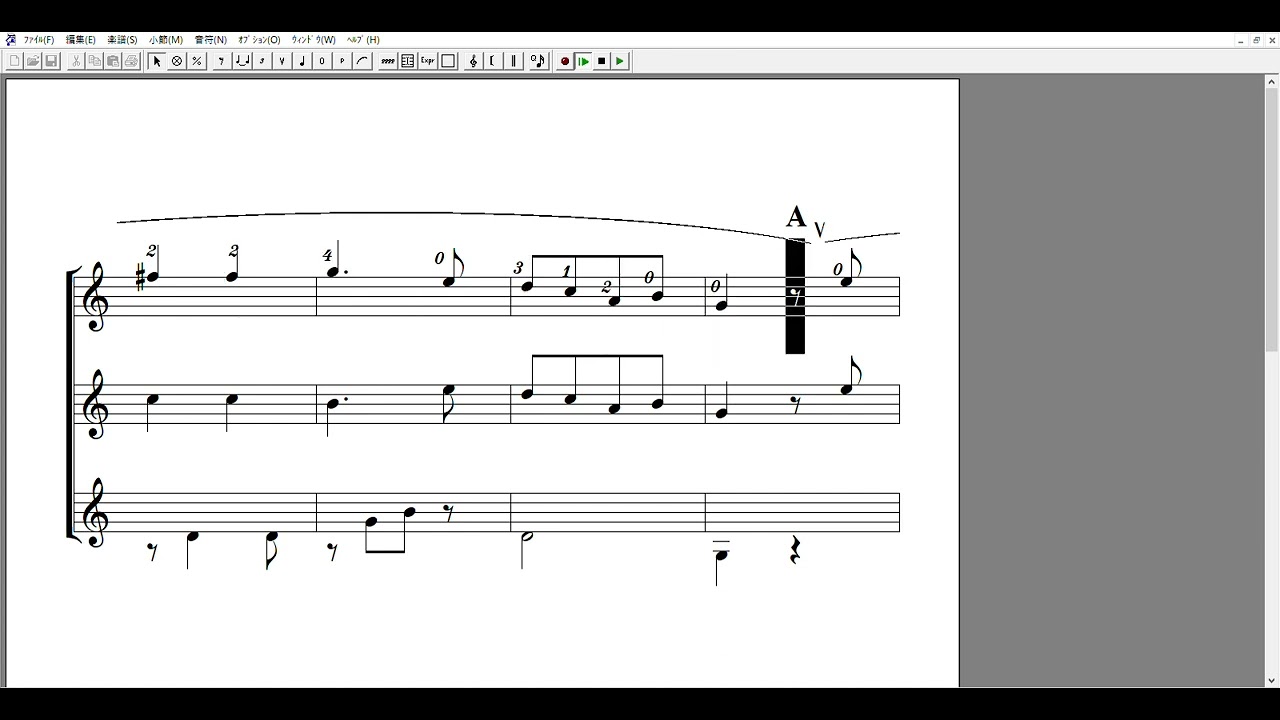
予習カルカッシp31Allegretto分析
カルカッシ教則本p31 Allegretto アレグレット)
今日の教材
楽譜→https://gtaoki2017.web.fc2.com/carcassiop31Allegretto.pdf
タブ譜→https://gtaoki2017.web.fc2.com/carcassiop31Allegrettotab.pdf
メロディー譜→https://gtaoki2017.web.fc2.com/carcassip31Allegrettomelody.pdf
メロディータブ譜→https://gtaoki2017.web.fc2.com/carcassip31Allegrettomelodytab.pdf
楽曲分析 Interpritation→https://gtaoki2017.web.fc2.com/carcassip31Allegrettoanalyze.pdf
パークニングギター教則本第2巻p97
Sor study Op.6 No.2—Study in A Major
p64(翻訳)レパートリー→https://gtaoki2017.web.fc2.com/perkening2p64.docx
p89 クラシック期解説
→https://gtaoki2017.web.fc2.com/parkening2p89a.pdf
p97Sor study Op.6 No.2—Study in A Major)
ソル 練習曲 イ長調(P.97)
p97コード分析→https://gtaoki2017.web.fc2.com/parkening2p97chord.pdf
p97コード分析タブ譜→https://gtaoki2017.web.fc2.com/parkening2p97chordtab.pdf
p97The sheet music(楽譜)→https://gtaoki2017.web.fc2.com/parkening2p97.pdf
p97The sheet music+tab note(楽譜+タブ譜)→https://gtaoki2017.web.fc2.com/parkening2p97tab.pdf
p97楽曲分析3重奏The sheet music(楽譜)→https://gtaoki2017.web.fc2.com/parkening2p97analyze.pdf
p97メロディーThe sheet music(楽譜)→https://gtaoki2017.web.fc2.com/parkening2p96melody.pdf
p97メロディーThe sheet music+tab note(楽譜+タブ譜)→https://gtaoki2017.web.fc2.com/parkening2p96melodytab.pdf
Sor—Study in A (p. 97)
ソル練習曲イ長調p97Sor study Op.6 No.2—Study in A Major
Interpretation: This short etude was chosen for its simplicity and beauty.
解釈 この短い練習曲は、その簡潔さそして美しさのために選曲しました。。
It contains a homogeneous texture of eight notes throughout, although the melody notes should ring for a quarter note each.
メロディーは4分音符で刻まれていますが、全体的に8分音符音からなる均質なテクスチャーを含んでいます。
Every melody note is followed by a two-note chord on the offbeat.
すべてのメロディーには、弱拍部に2声の和音が続きます。
These chords should be played staccato and more quietly than the melody notes for proper balance.
これらの和音は、適切なバランスを保つために、メロディ音よりもスタッカートで静かに演奏されるべきです。
The piece is divided into two-measure phrases, starting and ending in the middle of the measure.
曲は2小節のフレーズに分かれており、小節の真ん中で始まり、小節の真ん中で終わります。
Shape your phrases to follow the rise and fall of the melodic contour. Contrast the similar phrases at mm.
8-10 and 10-12 with a change in dynamics and/or tone color.
メロディーの輪郭の上昇と下降に沿うようにフレーズを作ってください。8小節目から10小節目と10小節目から12小節目の似たような
フレーズをダイナミックスや音色の変化で対比させましょう。
Pause on the beautiful surprise E# at m. 14, as well as the peak B in that measure and in the following one.
14小節目の美しいミ#と、その小節と次の小節の頂点の音シで休止をとります。
Ritard at the end of each section, especially at the end of the piece,
各楽節の終わり、特に曲の終わりでリタルダンドします。
since it ends in the middle of the measure on the eighth note of a weak 2nd beat.
つまりこの曲は小節の真ん中、弱い2拍目の8分音符で終わっているからです。
Normally pieces end on strong beats such as the downbeat (first beat) or 3rd beat.
通常、曲はダウンビート(1拍目)や3拍目などの強い拍で終わります。
Technique: Use rest stroke on melody for fullness of sound and to help dampen the previous two-note chord.
テクニック メロディーの休符は、音に厚みを持たせ、前の2音の和音を弱めるために使用します。
Also lift left-hand fingers off cleanly to stop the chord from ringing.
また、左手の指をきれいに離し、コードが鳴らないように注意します。
It should he stopped exactly as the next melody note is played.
次のメロディーの音を弾くときにぴたりと止める必要があります。
You will also have to set the right thumb down to stop any open bass strings
and any other notes that cannot be dampened by either the rest stroke or left-hand lift.
また、低音弦の開放音など、休符や左手上げでは減衰できない音は、右手親指を倒して低音弦の開放音を止める必要があります。
At m. 7 the 4th finger is a guide into m. 8.
7小節目で第4の指は8小節目へのガイドとなります。
This may create a slight portamento, if you wish.
これは、希望により若干のポルタメントを作り出すことができます
The second string fingering gives a more beautiful sound and also allows for vibrato.
②弦の運指はより美しい響きを与え、ビブラートも可能にします。
M. 14 is fingered in the 5th position for the same reason.
14小節目は同じ理由で第5ポジションの指使いになっています。