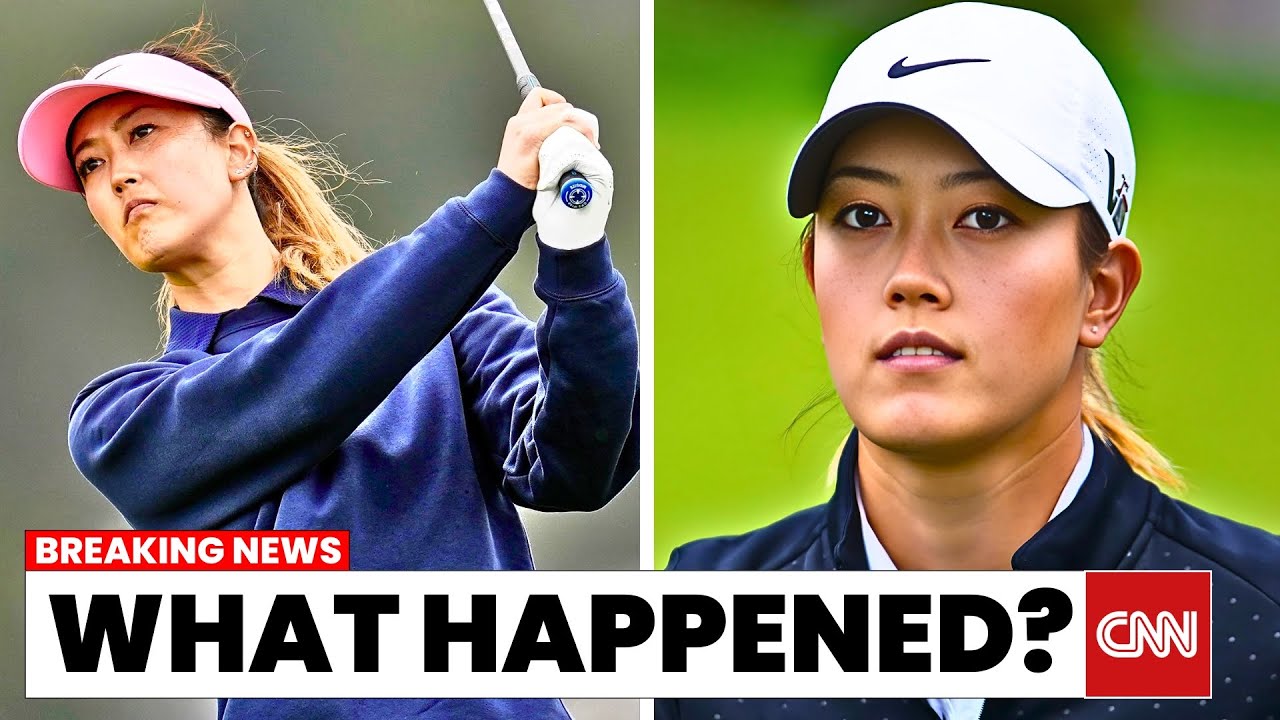
How Michelle Wie’s Career Could Have SOARED But Didn’t Because Of This…!
Michelle, you just we’re just talking you just missed it by one, but you got to be so proud of what you did and what you accomplished this week. Um, yeah. I mean, I was very proud of myself. Um, I played awesome today. So, just one shot better and I could have made it. And she wasn’t just a prodigy. She was a phenomenon. At 14, Michelle Wi West wasn’t supposed to challenge grown men on the PGA tour, but she did. The world called her the next Tiger Woods. Then the pressure, the fame, and the injuries arrived, and the girl who changed golf was suddenly fighting to save her swing, her confidence, and herself. We was born on October 11th, 1989 in Honolulu, Hawaii. She started playing golf at age 4. By age 10, she became the youngest player to qualify for a USGA amateur championship. At age 13 in 2003, she won the US Women’s Amateur Public Links Tournament, becoming the youngest person ever, male or female, to win a USGAA adult event. That same year, at the 2003 Craft Nabiscoco Championship, WA became the youngest player to make an LPGA cut at age 13. She carded a 66 in the third round, tying the amateur record for a women’s major championship. She made the cut at the US Women’s Open when still just 13, the youngest player ever to do so. January 2004 brought the performance that changed everything. Why received a sponsor’s exemption to the Sony Open in Hawaii, becoming the fourth and youngest female to play a PGA Tour event, still a 14-year-old ninth grader at Aahu’s Puno School, she shot 7268 to miss the cut by one stroke, turning the golf world upside down. Just one more shot and I would have made it, she said that day. It’s killing me now. Her second round 68 remains the lowest score ever shot by a woman at a PGA Tour tournament. She beat 47 men that week at YA Country Club, including 18 PGA Tour winners she tied Jim Furick. Her nickname, the big wheezy, alluded to her Ernie L’s like tempo. Their swings were uncannily similar. She can play on this tour, said else. If she keeps working, doing the right things, there’s no reason why she shouldn’t be out here. Sports Illustrated made comparisons to Tiger Woods, who had missed the cut by six in his first PGA Tour start at the 1992 LA Open at age 16. Wii was already 6 feet tall, and her 300yard drives were helping her reach parfives in two. In 2004, Wii won a Loris World Newcomer of the Year award. She was the youngest woman ever at 14 to play in the Curtis Cup tournament that the US team won. At the 2005 John Deere Classic, where Wii competed as an amateur on a sponsor exemption, she shot 7071 to miss the cut by two. Wii turned professional in October 2005, a week before her 16th birthday. In 2006, she became the first female medalist in a qualifier for the men’s US Open. She also competed on the Asian tour where she became the second woman to make the cut in a men’s tournament at the SK Telecom Open. Behind the spectacular performances, a critical error was unfolding. We training regimen mirrored the approach of top male professional athletes rather than that of a teenage girl still physically developing. During a conversation on the Quiet Please podcast, we recalled the training regimen’s toll on her body and blamed the approach for her careering injuries. She admitted that her extreme training methods were directly connected to the wrist and body injuries that later plagued her career. She stated frustration over the lack of research and advice for young female athletes after stressing that her early 2000’s workout routines were the same as grown men preparing for professional sports. So, this is like a year after I turned pro in the biggest hyped event ever. Everyone saying I’m the next Tiger Woods, whatever. I went through like the two toughest years. she admitted. We later reflected on this period. There’s a lot of mistakes that I’ve made in that career. Are those regrets? No, because I’ve learned from them. She said, “You have to make mistakes. You have to make the wrong decision.” From time to time, I think the only regret that I have or thing that I would learn from if I did it again is to be more patient with my body. I rushed it when I should have just let things rest naturally instead of rushing the process. In February 2007, reports indicated that we hurt her left wrist in a fall while running. Initially, her public relations staff reported that she would be away from golf for 4 to 6 weeks, but the injury lasted until the end of May. In response to the lack of information and prolonged absence, fellow LPGA professional Brittany Lindome questioned whether we and her parents had fabricated the injury to give her a reason to take a break from golf. The truth was far more serious. I was actually on a visit to Stanford, ended up working with the golf team and did some workouts that I do with my trainer. We said without her trainer present, she attempted a backward run, not knowing it would lead to a wrist injury that would linger for years. At the 2007 US Open, when we held back tears as she battled through what was later revealed to be a broken wrist, Wii’s 2007 season became a disaster. She suffered a four-month hiatus due to injuries to both wrists, a disqualification, and several missed cuts and withdrawals. At the LPGA Gin tribute hosted by Anakah, she was 14 over par through 16 holes in the first round before withdrawing, citing the injury. The withdrawal was controversial owing to the LPGA rule of 88, which states that a nonLPGA member shooting a score of 88 or more is forced to withdraw and banned from LPGA co-sponsored events for the rest of the year. Later that year, after finishing one stroke off the lead during the second round of the State Farm Classic, she was disqualified for walking outside of the official tournament area before returning to sign her scorecard. I came back from my injury way too quick. I was taking way too many painkillers to go out and play,” Wii said in an interview on YouTube. Michelle Wii West was once golf’s brightest prodigy. At just 14, she nearly made the cut at the 2004 Sony Open, outplaying 47 male professionals the media crowned her the female Tiger Woods. But the pressure to live up to that name came with a price. I remember not telling the media really honest answers about my injuries just because I didn’t want to feel weak, she admitted on Nike’s no offseason podcast in 2022. “We made eight career starts on the PGA Tour, missing the cut seven times and withdrawing once due to illness. Her best showings came at the Sony Open and John Deere Classic, where she missed the cut by only a stroke. Her loan made cut in a men’s event was at the 2006 SK Telecom Open on the Asian Tour. But as her scores fell, critics grew louder, questioning why she was given spots that could have gone to others. By 2007, the hype had turned into doubt. We had played 14 straight tournament rounds without breaking par and missed 11 of her last 12 cuts. Despite no professional victories, she ranked fourth on Forbes’s top 20 earners under 25 list, making $19 million annually through endorsements. In 2009, at last eligible for full-time LPGA play, she tied for seventh at qualifying school and earned her card. Later that year in Mexico, she captured her first LPGA victory at the Lina OOA Invitational. Over her first four seasons, she ranked among the top five in driving distance, even leading the LPGA with a 274.5 yard average in 2010. Michelle Wi West’s greatest moment came in 2014 when she won her first and only major, the US Women’s Open, securing victory with a clutch birdie on the 17th hole. That year, she also earned the Rolex Anakah Major Award and ranked among the best in pudding and accuracy. Her final win came in 2018 before wrist injuries and arthritis ended her prime. By 2022, after years of surgeries and setbacks, she retired at Pebble Beach, sinking a 30foot par putt in tears. “It feels like nothing has changed, and everything has changed all at once,” she said, closing one of golf’s most bittersweet careers. We later admitted she was forced into retirement. Talking to hand surgeons, there just wasn’t an answer forward. Michelle Wii West ended her career with five LPGA victories, one major, and 49 top 10 finishes. She represented the US in five Soloulheim Cups and reached a peak world ranking of number two at age 16. But her story is a cautionary one, a tale of brilliance hindered by relentless pressure and training regimens built for grown men, not a teenage girl. The same strength that made her famous ultimately broke her down.
Michelle Wie West was once the most electrifying young talent golf had ever seen. At 14, she nearly made the cut against grown men on the PGA Tour, outdriving champions and being crowned the female Tiger Woods.The world expected her career to become a dynasty. But behind the highlight reels and magazine covers was a dangerous truth her training mirrored that of elite male professionals, not a teenage girl still growing.
Her story is not a failure it’s a warning. Michelle Wie West still captured a major, five LPGA victories, a U.S. Women’s Open title, and 49 top-10 finishes before arthritis and wrist injuries forced her to retire at just 33 years old.In a world obsessed with the next Tiger Woods, Michelle Wie West lost the chance to become the best version of Michelle Wie.
#MichelleWie #GolfDocumentary #LPGAHistory #SportsProdigies #UntoldSportsStories