


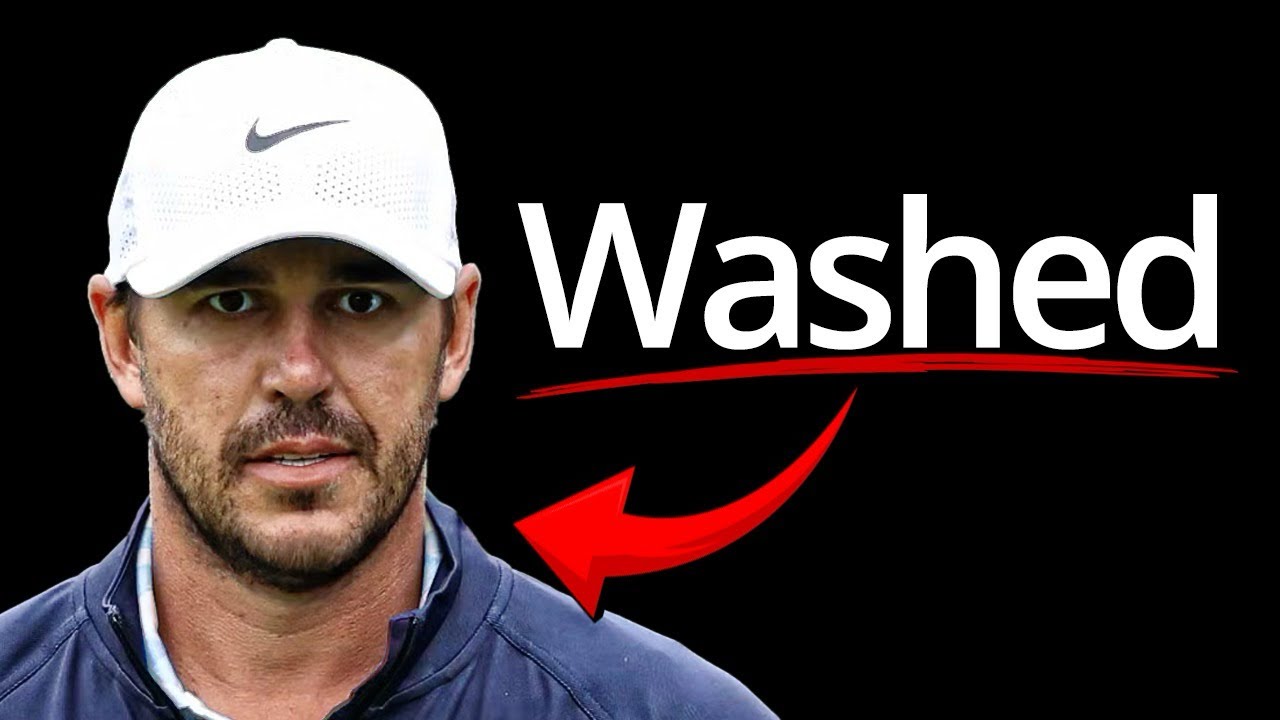
ブルックス・ケプカに一体何が起こったんだ?
Remember when Brooks Kempka was the baddest man in golf? The guy who made majors look easy, who stared down Tiger, DJ, and Rory and didn’t blink? The guy who made us all believe that for a few years, he was the closest thing to a modern-day Jack or Tiger. Now, it feels like we’re watching a different player. The swag has faded. The winds have dried up, and the only headlines Brooks is making are about live golf, injuries, and what could have been. So what the heck happened to Brooks Kepka? Golf is a game of eras. Every generation had its alpha. Palmer, Nicholas, Tiger. For a brief, glorious window, Brooks Keepka was that guy. He was the major machine, the big game hunter. The player who made the rest of the field look like they were playing for second. But in the last few years, something’s changed. The results aren’t there. The intimidation factor is gone. And the man who once seemed invincible now looks well human. Today we’re breaking down the rise and fall of Brooks Kapka. We’ll look at how he became the most feared player in golf, what’s changed since he joined Liv, and whether there’s any way back to the top. Let’s rewind to 2017. Brooks Kapka is 27 years old, a big athletic kid from Florida who took the road less traveled, grinding on the European Challenge Tour, learning to win in places like Kazakhstan and Kenya before making it big in America. He’s always had the tools. Long off the tea, fearless with the irions, and a putter that got hot when it mattered. But what set Brooks apart was his mentality. He didn’t just want to win. He wanted to dominate. He wanted to make you uncomfortable, to make you feel like you were playing for second. And for a while, that’s exactly what he did. Let’s look at each of his major wins. The 2017 US Open at Aaron Hills. Brooks won his first major by four shots, tying the US Open scoring record at 16 under. He looks unflapable, hitting fairways, sticking irons, and draining puts. The rest of the field is left shaking their heads. Then at the 2018 US Open at Shinikok Hills, Brooks goes back to back, becoming the first player in nearly 30 years to win consecutive US Opens since Curtis Strange. He does it on a brutal setup, outlasting Dustin Johnson and Tommy Fleetwood with a mix of power and grit. Then there was the 2018 PGA Championship at Bellariv. He stares down Tiger Woods. Yes, that Tiger Woods on Sunday holds him off and wins his third major in 14 months. The message is clear. Brooks isn’t just a fluke. He’s the real deal. Then the 2019 PGA Championship, Beth Paige Black. Brooks goes wire towire, setting a 36 hole scoring record and holding off a late charge from DJ. He’s now on four majors in eight starts. For a stretch, he’s the most dominant player in the world, and it’s not even close. 2019 US Open Pebble Beach. He nearly wins three US Opens in a row, finishing second to Gary Woodland. He’s in the mix at every major every time. The mental edge. Brooks was famous for saying he only cared about majors. I just practiced before the majors, he’d say. The rest of the time, I’m just hanging out. It was part bravado, part truth, and it worked. He made the majors his personal playground, and the rest of the field wilted. For a while, Brooks was the guy everyone feared. He was the alpha, the closer, the guy who made golf look easy when it was anything but. But then, almost as quickly as he rose, Brooks started to fade. It started with a knee, then the wrist, then the hip. Brooks’s body, built for power, started to break down. He played through pain, but the swing wasn’t the same. The confidence wavered. The results slipped. He missed cuts. He withdrew from tournaments. He looked frustrated, angry, and at times lost. Then came the bombshell. Brooks Kepker was leaving the PGA Tour for live golf. The Saudi backed league offered guaranteed money, a lighter schedule, and a chance to cash in while he still could. For Brooks, it was a business decision. I’m not getting any younger, he said. I’ve got to think about my family. But the move came with a cost. The week in weekout grind of the PGA Tour was gone. The pressure of making cuts, of playing for your paycheck, of facing the best in the world every week, it all disappeared. Live golf was different. Fewer events, smaller fields, no cuts, and a team format that felt more like an exhibition than a battle. For a guy who thrived on pressure, on proving people wrong on the biggest stages, it was a different world. Since joining Liv, Brooks’s record in majors has been mixed. He won the 2023 PGA Championship, his fifth major, putting in rare company. But he’s also missed more cuts and had fewer top 10s than during his peak. The intimidation factor is gone. The aura is gone. The guy who used to walk onto the first tea and make everyone else nervous now looks like he’s searching for answers. Brooks’s edge was always mental. He believed he was better than you, and he made you believe it, too. But injuries, the live move, and the loss of week-to-eek competition have chipped away at his confidence. He’s still got the talent. He’s still got the power. But the fire, the thing that made him special, seems to have dimmed. Let’s look at the stats. From 2017 to 2019, Peak Brooks had four major wins in eight starts, seven top fives in majors, two PGA Tour wins outside of majors, world number one ranking, a scoring average of 69.2, and top 10s in 60% of starts. 2022 to 2025 in his live era. He’s had one major win since the 2023 PGA Championship, two top 10s in majors, no PGA Tour wins cuz he’s suspended. He’s had not a lot of world ranking plummets due to no owgr points in live. His scoring average is 70.8 in majors, and he’s had top 10s in less than 20% of his starts. The numbers don’t lie. Brooks went from being the most dominant player in the world to just another name on the leaderboard. But it’s not just the stats. It’s the way he carries himself. The confidence is still there, but it feels forced. The interviews are more defensive. The swagger is more subdued. He’s still capable of brilliance. Just look at the 2023 PGA. But the consistency, the fear factor, the sense that he could win any week, that’s gone. So, what happened? Why did Brooks lose his edge? Well, let’s break it down. Number one, the schedule. Live Golf’s lighter schedule means fewer reps, less pressure, and less week-to-eek competition. For a player who thrived on the grind, on the battle, on the constant challenge, it’s a big adjustment. Number two, the competition. Liv’s fields are strong, but they’re not the PGA Tour. The best players in the world are still on the tour, still grinding every week. Brooks isn’t facing the same level of competition, and it shows. Number three, the motivation. Brooks always said he cared more about majors than regular events, but without the week-to-eek grind, it’s harder to peak for the big ones. The rhythm is off, the edges dulled. Number four, the money. Let’s be honest, guaranteed money changes things. When you’re playing for a paycheck every week, the pressure is real. When you’ve already cashed in, it’s harder to find that extra gear. Number five, the distraction. The live controversy has been a distraction. The media questions, the fan backlash, the uncertainty about the future, it all adds up. For a guy who thrived on focus, it’s been a challenge. Number six, the team format. Brooks was always a lone wolf. He thrived on being the guy everyone wanted to beat. The team format in Liv, while fun, doesn’t bring out the same killer instinct. It’s hard to be the alpha when you’re sharing the spotlight. Brooks has always been a complicated figure. He’s brash, confident, and sometimes abrasive. He’s not afraid to speak his mind, to call out the media to needle his rivals. But he’s also fiercely loyal to his team, his family, and his friends. He’s battled injuries, self-doubt, and the pressure of being the guy everyone wants to beat. In interviews, Brooks has been honest about his struggles. Golf is a lonely game, he said. When you’re on top, everyone wants a piece of you. When you’re not, you find out who your real friends are. He’s talked about the mental toll of injuries, the frustration of not being able to compete at his best, and the challenge of finding motivation when the game isn’t fun anymore. For fans, Brooks is relatable. He’s not perfect. He’s not always polished, but he’s real, and that’s why so many people root for him, even when he’s not winning. Brooks’s persona has always been part of the show. He’d show up to majors with a chip on his shoulder, say he didn’t care about regular events, and then go out and prove it. He was the anti-establishment guy in a sport that loves its traditions. He’d call out slow play, roll his eyes at the media, and make it clear he was there to win, not to make friends. For a while, that attitude was refreshing. It made him must see TV. But as the results faded, the persona started to wear thin. The bravado sounded like bluster. The confidence felt more like defensiveness, and the fans who once loved his swagger started to wonder if it was all just an act. So, is Brooks kept her done, or is there still another act in this story? The case for a comeback is he’s still young at 35. He’s still got the talent. He’s still got the major mentality. He’s shown flashes of brilliance even in the live era. If Brooks can get healthy, find his motivation, and get back to playing against the best every week, there’s no reason he can’t win more majors. That he’s too good, too tough, and too competitive to fade away quietly. The case against is the injuries may be too much. The live schedule may be too easy. The fire may be gone. Golf is a game of inches. And the difference between winning and losing is razor thin. If Brooks can’t find that extra gear, he may be remembered as a shooting star. A guy who burned bright, burned fast, and left us all wanting more. What would it take for Brooks to come back? He’d need to get healthy and stay healthy. Find a way to get sharp even with a lighter schedule. Rekindle the mental edge that made him great. Maybe, just maybe, return to the PGA Tour and face the best every week. It’s a tall order, but if anyone can do it, it’s Brooks. He’s proven people wrong before. He’s thrived on doubt, on adversity, on being the underdog. So, what will Brooks Keeper’s legacy be? For a few years, he was the best player in the world. He won majors at a rate we hadn’t seen since Tiger. He made golf cool, made it tough, made it fun to watch. But the last few years have been a reminder that greatness is fleeting. The game moves on. The next generation is always coming. Brooks will always have his majors, his moments, his place in history. But the question now is whether he can add to that legacy or whether he’ll be remembered as the guy who could have been even more. Every great athlete has a what if attached to their story. For Brooks, it’s a what if he’d stayed healthy? What if he’d stayed on the PGA tour? What if he’d kept that edge? He’s not the first to face those questions and he won’t be the last. But for fans who watched him dominate, who saw him stare down the best in the world and not blink, it’s hard not to wonder what might have been. Brooks changed the way players think about majors. He made it okay to focus on the big ones, to peak for the moments that matter. He showed that you don’t have to play 30 events a year to be great. You just have to show up when it counts. He also changed the way players talk to the media, the way they interact with fans, and the way they approach the mental side of the game. He was honest, sometimes brutally so, and that honesty made him both loved and hated. Young players like Colin Morawa, Victor Hovland, and Scotty Sheffller have all cited Brooks as an influence. They’ve seen what it takes to win majors, to handle pressure, to play with a chip on your shoulder. Brooks’s legacy isn’t just in his trophies. It’s in the way he inspired a new generation to believe they could win, too. So, what the f happened to Brooks Kepka? He was the major machine, the alpha, the guy who made golf look easy. Now he’s searching for answers, fighting for relevance, and trying to find his way back. Maybe he will, maybe he won’t. But one thing’s for sure, we’ll be watching because when Brooks is on, there’s still nobody better. What do you think? Is Brooks done? Can he come back? Let us know in the comments below. And don’t forget to like and subscribe for more golf content. Now, if you want to see what happened to Hunter Mayhem, click on this video.
What The F*ck Happened To Brooks Koepka? Subscribe and like for more golf content! Let us know what you think in the comments!
ブルックス・ケプカに一体何が起こったんだ?
1 comment
Comments are closed.
How many majors do you think Brooks Koepka can reach?