



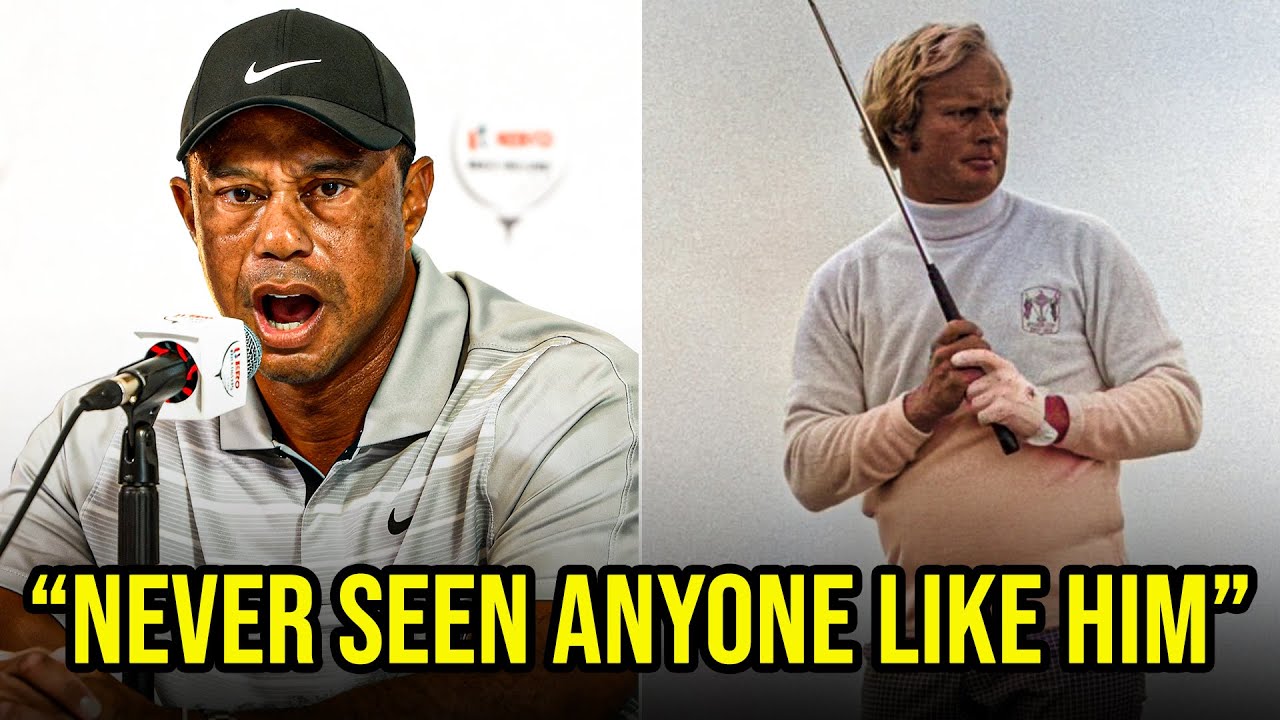
Golf Legends Share The First Time They Faced Jack Nicklaus
Jack has always been one of my heroes. But Jack is the greatest. You’re the greatest putter I’ve ever seen. Dale can putt the same way. They’d never seen anyone like him. The silence was deafening. The pressure unbearable. And the psychological weight of just standing near Jack. Nicholas could end careers before they began. But here’s what most people miss about the Golden Bear. That intimidating presence. That crushing standard of excellence, that impossible bar he set. It wasn’t meant to destroy competitors. It was meant to forge them into something greater. And the golfers who understood this, who leaned into the discomfort instead of running from it, discovered something remarkable. They didn’t just become better players. They became legends in their own right. Jack Nicholas didn’t just win 18 major championships. He finished second in majors 19 times. Think about that for a moment. The man was so consistently excellent that even his losses were legendary. When you stepped onto a course with Nicholas, you weren’t just playing against another golfer. You were challenging the entire historical consensus of what winning requires. That first encounter with the Golden Bear acted like a diagnostic test. immediately revealing whether a player had the mental strength to sustain a career at the highest level. And what separated the champions from everyone else wasn’t physical talent. It was something much deeper. This distinction is what makes Nicholas truly unique in sports history. Other athletes dominated their eras through physical superiority or technical mastery. Nicholas dominated through an almost supernatural combination of skill and mental fortitude. His presence on a leaderboard changed how competitors thought about their own games. Players who might have been satisfied with a top 10 finish suddenly felt compelled to push harder, take more risks, dig deeper into their reserves of courage and determination. The Golden Bear didn’t just raise the bar for winning, he fundamentally altered what it meant to compete at the highest level. Before we dive into these incredible encounters, do me a favor, hit that subscribe button and drop a comment. I want to know what you think. Who had the better psychological approach against Nicholas? Was it Lee Trevino with his constant chatter and jokes or Tom Watson with his transformation from worshipper to fierce competitor? Let me know your thoughts because these approaches couldn’t have been more different. Yet, both worked brilliantly. Early in his career, Nicholas established a reputation that made grown men nervous. He preferred silence during competition. Intense, laser focused concentration was his trademark. This wasn’t just a personal quirk. It was a weapon. The stoicism created a psychological barrier that demanded rivals not only master golf, but also find a way to penetrate this mental shield. For the players of his generation, success meant immediately disrupting the established order that Nicholas had created. And nobody disrupted that order quite like Lee Trovino. When Trevino was paired with Nicholas for the first time, everyone knew about Jack’s preference for quiet rounds. Famous for his humor and non-stop commentary, Trevino represented everything Nicholas supposedly couldn’t stand. Before they even teed off, Nicholas approached Trevino to make his preferences clear. He wanted minimal conversation during the round. Now, most players would have nervously agreed and spent the day in uncomfortable silence. But Trevino wasn’t most players. He agreed to the request, but then delivered an immediate psychological counterpunch that completely flipped the dynamic. He told Nicholas that was perfectly fine. He didn’t have to talk. He just had to listen. This moment transcended simple conversation. It was Trevino successfully asserting his personality onto the competitive stage. By refusing to surrender the psychological advantage to Nicholas, Trevino neutralized one of the Golden Bears most powerful forms of intimidation. The ability to maintain his natural style, which was essential to his game, allowed Trevino to compete effectively against the greatest player in the world. Later, Trevino would famously dismiss Nicholas’s physical game compared to his own, suggesting that if Jack had to play his T-shots, he couldn’t break 80. This level of competitive confidence wasn’t arrogance. It was a necessary ingredient for standing as a legitimate rival to Nicholas. Tom Watson’s journey to becoming Nicholas’s greatest rival required a completely different transformation. Early in his career, Watson viewed Nicholas as the ultimate unbeatable golf god to mount an effective challenge. Watson needed a mental shift from devoted admire to genuine threat. This change was so profound that Watson later admitted to reaching a point where he genuinely hated Nicholas competitively, not personally, but with the intense focus required to threaten his throne. The defining moment came during the 1977 Open at Turnberry. A battle remembered as the duel in the sun in the scorching heat of the final round. These two men pushed elite golf to its absolute limits. During a moment of crushing pressure, Watson turned to Nicholas and acknowledged what they were experiencing. He asked if this was what it was all about. Nicholas’s reply was immediate and simple. You bet it is. That exchange signaled mutual recognition that they were performing at the very highest competitive standards. The competitive bond between them was forged only after Watson proved he could consistently match and sometimes beat the established champion. Years later, Nicholas would affectionately call Watson a baby for becoming emotional during Jack’s farewell at the US Open, showing how their fierce rivalry had evolved into genuine friendship. The experiences of Trevino and Watson reveal a crucial truth. Success against Nicholas required disrupting his preferred environment. He implicitly demanded respect through dominance and silence. Trevino achieved disruption through immediate rebellion and noise. Watson achieved it through emotional transformation and relentless execution. Both paths worked because both men refused to play by Jack’s psychological rules. What makes these stories so compelling is that Nicholas himself seemed to respect this refusal to submit. He didn’t want weak competitors who would simply fold under pressure. He wanted worthy rivals who would push him to be better. Who would force him to elevate his own game. In that sense, the intimidation factor was almost like a filter, separating those who belonged at the highest level from those who didn’t. This dynamic reveals something profound about Nicholas’s character. He could have easily dismissed players who didn’t conform to his standards. He could have used his status to marginalize those who challenged his authority, but he didn’t. Instead, he seemed to recognize that golf needed strong personalities and diverse approaches to remain vibrant and competitive. The game was better when Trevino brought humor and energy. It was better when Watson brought fierce determination. Nicholas understood that his legacy wasn’t just about his own achievements. It was about raising the entire sport to a higher level, creating an environment where excellence became the only acceptable standard. As Nicholas entered the later phases of his career, his role shifted from chief antagonist to something more complex. He became a profit of discipline, offering guidance that blended high praise with sharp warnings about what sustained success truly requires. The story of John Daly perfectly illustrates this evolution and serves as one of golf’s most cautionary tales. Following Daly’s stunning 1991 PGA Championship victory, analysts noted striking physical similarities between his powerful swing and Nicholas’s mechanics from his younger days. Both shared massive legs, huge hip turns, powerful forearms, and club heads that dropped way below parallel. Nicholas publicly acknowledged this raw talent, endorsing Dy’s potential by saying he could be the next one. This recognition from the game’s ultimate winner was significant. Jack saw a kindred physical engine, someone who could potentially carry the torch forward. But recognition of talent was just the beginning. As Daly struggled publicly with alcohol and personal problems, Nicholas demonstrated characteristic generosity. He extended invitations for lunch, suggested practice rounds, and provided an open line of communication. Here was the greatest winner in golf history, offering direct mentorship to a young player with immense potential. The outcome, however, was heartbreaking. Daily showed no interest. This refusal to accept guidance from the game’s ultimate winner highlighted a fundamental truth that Nicholas understood deeply. Physical talent means nothing when divorced from mental and emotional discipline. The daily situation serves as Nicholas’s most powerful statement about comprehensive success. Raw ability, no matter how extraordinary, cannot overcome a lack of stability and focus. Nicholas himself attributed much of his Hall of Fame career to meeting his wife Barbara, calling it the most important moment of his professional life. This philosophy of holistic excellence, where personal foundation supports professional achievement, became central to how Nicholas evaluated greatness. The contrast between what Daily could have been and what he became, stands as perhaps the most poignant example of Nicholas’s wisdom. Here were two players with remarkably similar physical gifts. Yet their careers took dramatically different paths. One built a legacy that may never be matched. The other became a cautionary tale about squandered potential. For Davis Love III, who grew up around professional golf, facing Nicholas was woven into his early development. He once referenced a competitive match as him and Jackie against Jack, referring to playing alongside Nicholas’s son, for players whose fathers were also professionals. Nicholas wasn’t a remote competitor. He was a constant standard setter from the very beginning. playing against him, even casually, established an impossibly high measure of success. The expectation wasn’t just winning tournaments. It was mastering the game with the same integrity and tradition that the Golden Bear embodied. In the modern era, Nicholas solidified his role as golf’s elder statesman, setting standards focused heavily on respect for tradition and mental toughness. Justin Thomas learned this lesson immediately. When Thomas first met Nicholas, he entered Jack’s house wearing his hat. Nicholas didn’t hesitate. He asked with a laugh. If it was raining inside, then he told Thomas to remove the hat. Thomas recalled feeling completely embarrassed, noting he forgot to take it off and felt like an idiot. This interaction wasn’t about swing technique or strategy. It was an immediate test of respect for environment and tradition. By enforcing this boundary, Nicholas ensured future advice would be received within a framework of proper respect. In his view, discipline begins with mastering small details of conduct before advancing to highle strategy. The relationship evolved into something more relaxed. Nicholas famously made an error following a crucial putt by Thomas. Mistakenly believing he’d won the memorial, he and Barbara immediately texted congratulations. Only to realize Colin Morawa had actually won. Nicholas followed up, admitting oops, a little premature his willingness to laugh at himself showcased the human, approachable mentor behind the stern traditionalist image. Nicholas’s council to Rory Mroy cuts directly to the core issue hindering his pursuit of the career grand slam. Before one masters, Nicholas reviewed Mroyy’s course strategy shot by shot. Following the detailed review, Nicholas confirmed complete approval, stating he wouldn’t change a thing and that it was exactly how he would play the course. This endorsement validated Mroyy’s elite ability and strategic understanding. But then came the crucial critique. Despite possessing all the shots and being as talented as anybody in the game, Nicholas expressed his ultimate concern. The discipline is what Rory has lacked in my opinion. He specifically noted that Mroy allows high scores to pop up like an eight or a seven, which inevitably derail major championship efforts. This diagnosis confirms that the modern challenge for elite golfers is predominantly mental, not physical. Nicholas frames consistency and mental resilience. The hallmarks of his own career as defining prerequisites for major success. The challenge today isn’t hitting perfect shots. It’s maintaining composure when things go wrong and preventing one bad hole from destroying an entire tournament. This insight comes from someone who lived it, who faced the pressure of major championships 164 times and found a way to contend in an astonishing percentage of them. When Nicholas talks about mental discipline, but he’s not theorizing. He’s sharing the wisdom earned through decades of performing under the most intense pressure imaginable. What makes Nicholas’s advice to Mroy particularly striking is its precision. He didn’t offer vague platitudes about trying harder or staying focused. He identified the specific pattern that prevents Mroy from winning the Masters. Those catastrophic holes. The eights and sevens that suddenly appear represent mental lapses rather than physical failures. Mroy possesses every shot needed to win Augusta National. What he lacks, according to Nicholas, is the mental discipline to avoid the disasters that erase hours of excellent play. This is the voice of experience speaking, a champion who understood that major championships are often lost rather than won. Nicholas’s philosophy extends beyond technique and mental game. He frequently emphasizes his personal life’s crucial role in sustaining professional achievement. Meeting Barbara was the most important career moment, he claims, attributing Hall of Fame success to her unwavering support. This philosophy informed his reflection on Tiger Woods’s career, particularly regarding partnership. When discussing Woods getting married, Nicholas believed it would only be a plus. His reasoning tied to sustainability and fulfillment from long-term dominance. Woods would eventually tire of telling his coach he wanted another one. He needed somebody to share it with to enjoy the fruits of his work. This advice frames legacy itself. Dominance must be enjoyable, sustainable, and critically shared. This perspective highlights the contrast between Nicholas’s decades of personal stability and the significant turbulence that later complicated Woods’s career. While Woods dominated between 1997 and 2008 in perhaps unmatched fashion, holding all four majors simultaneously, Nicholas’s record demonstrates sustained consistency built on stable foundation. He recorded 55 top 10 finishes in majors, including 35 of 40 in the 1970s alone. Nicholas’s role as ultimate standard bearer extends to the present where he remains an unflinching judge of competitive performance. His contemporary critique of Phil Mickelson powerfully illustrates this. When asked about Mickelson’s status following his live tour move, Nicholas offered a profoundly dismissive assessment. He stated he didn’t know what level Phil competed at anymore. Questioning whether he even played, noting, “You never see that anymore.” Although Mickelson won six majors, including three masters, Nicholas’s comment removes him from current elite champion conversations by citing competitive invisibility. This critique declares that competitive relevance requires participation and consistent performance on the traditional world stage by claiming ignorance of Mickelson’s current sphere. Nicholas subtly preserves his own legacy. He insists his 18 majors and historic consistency remain the untarnished gold standard measured against highest visibility, traditionally sanctioned stages, true competitive greatness, in his view requires decades of visible excellence underpinned by appropriate conduct and engagement. The compilation of first encounters with Jack Nicholas reveals profound truth about his influence. Nicholas consistently serves as the constant unforgiving measure of excellence, defining each challenger’s character and competitive potential. The roles he assumed across eras from silent intimidating competitor of the 1970s to unheated profit for talented but undisiplined players to traditionalist mentor of the modern era all share one unifying element. To succeed against him or in his legacy’s shadow required full commitment to psychological and professional discipline matching his standards. For Tino and Watson, success required actively disrupting Nicholas’s psychological dominance. For modern players, success hinges on internalizing advice regarding mental fortitude and adherence to decorum. Nicholas’s framework, demonstrated through his analysis of Woods’s need for personal foundation and dismissal of Mickelson’s reduced visibility, insists Golf’s greatest achievements intertwine with personal stability and competitive relevance on the major stage. The stories of facing Nicholas define the challenger’s path as much as they reaffirm the unparalleled standard he set. His influence ensures requirements for true sustained greatness remain fixed. Talent must match profound discipline, respect for tradition, and stable life built for longevity. That’s the lesson Jack Nicholas taught every player who encountered him. The intimidation, the silence, the impossible standard. It wasn’t meant to crush them. It was meant to reveal who possessed the complete package necessary for genuine lasting greatness. And those who understood this, who embraced the challenge rather than feared it, discovered they could achieve things they never thought possible. If you enjoyed this deep dive into golf’s greatest encounters, make sure you’re subscribed and hit that notification bell. These stories remind us that greatness isn’t just about talent. It’s about character, discipline, and the courage to face your fears head-on.
#golf #golers #golfcontroversies #putt #golf swing #jacknicklaus
They’d never seen anyone like him. The silence was deafening, the pressure unbearable, and the psychological weight of just standing near Jack Nicklaus could end careers before they began. But here’s what most people miss about the Golden Bear. That intimidating presence, that crushing standard of excellence, that impossible bar he set? It wasn’t meant to destroy competitors. It was meant to forge them into something greater. And the golfers who understood this, who leaned into the discomfort instead of running from it, discovered something remarkable. They didn’t just become better players. They became legends in their own right.
Tom Watson or Lee Travino?
Are you kidding me?
Dud Jack ever take down VeJay or Brooks? Did he ever destroy a career like Tiger did to Duval? Jack split wins with Arnold against the weakest field. Nobody is copying his putting stroke, and nobody is copying his swing. how hard do you think it was for Nicklaus to compete against a field that worked as club pros Monday thru Wednesday?
Phil Mickelson would have destroyed that era of golf. Look at Jack's best shots: a 20 foot put on slow greens, and compare them to Mickelesons.