



84歳にして、ジャック・ニクラウスの暗い真実がついに明らかに
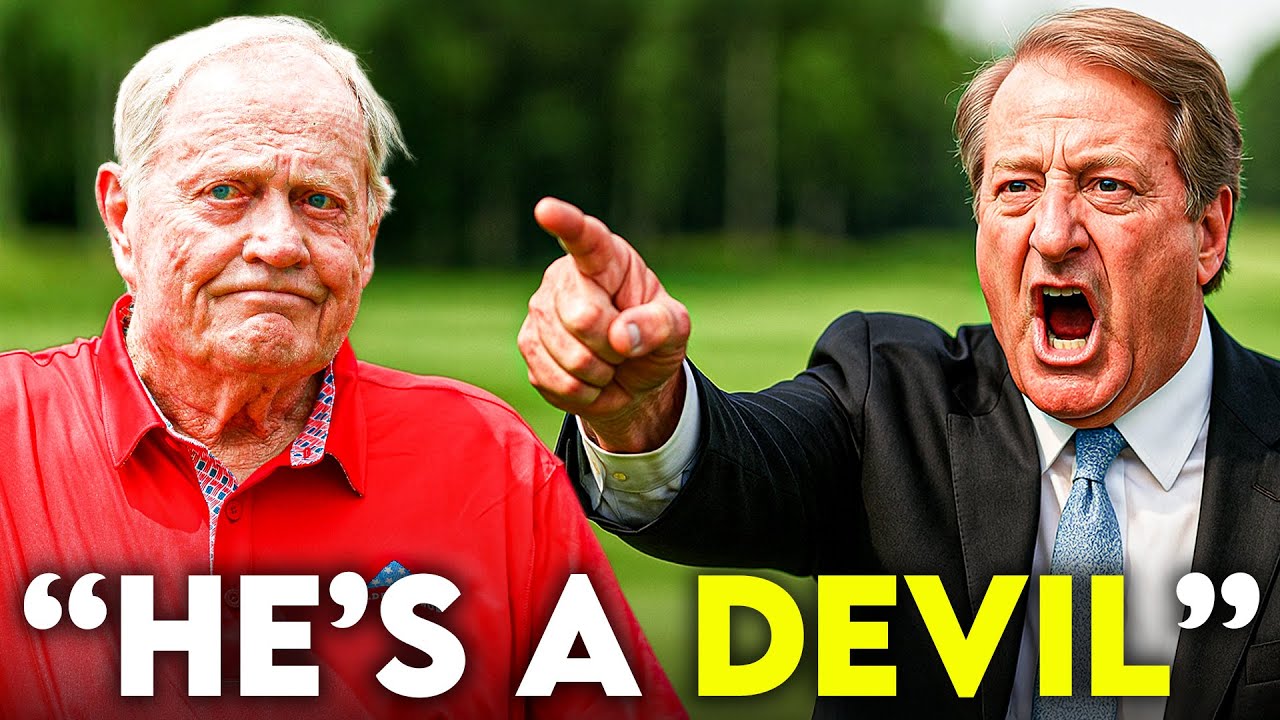
They called him a devil. His own business partner accused him of lies and deceit. In 2022, billionaire banker Howard Milstein sued golf legend Jack Nicholas through his own company, claiming Nicholas had no right to use his own name for business. Milstein’s lawyer suggested the 82-year-old champion was losing his mind and needed his car keys taken away. But is Jack Nicholas really the devil his partner painted him to be? The dark truth is something else entirely. Behind the Golden Bear’s legendary calm lies a fighter who has battled for control his entire life. Not just for trophies, but for his very identity. The real story is about a man who has faced betrayal, near bankruptcy, and scandal, yet always fought back and won. Jack Nicholas won 18 major championships, a record that still stands today. His greatest victories might have happened off the golf course. To understand this legend, we need to go back to 1968 when Nicholas faced his worst year as a professional golfer. By his own standards, 1968 was a disaster. He won only two tournaments, his lowest total since turning pro. At the PGA Championship in San Antonio, he missed the cut, something almost unheard of for a player of his skill. What made the slump so puzzling was that his golf skills were still sharp. His scoring average for 1968 was 69.97, one of only four years he broke the 70stroke barrier. So, what was wrong? The answer lies in a bitter war tearing professional golf apart. The tour’s biggest stars were locked in a fierce battle with the Professional Golfers Association of America. The fight was about opportunity, money, power, and control. Golf had exploded in popularity during the 1960s. Prize money had jumped from $1 million in 1958 to 5.6 million by 1968. But the touring professionals felt this new wealth was being mismanaged. The PGA of America was run by club professionals, not touring players. The stars argued that the PGA was not equipped to manage the growing tour. This was not a quiet disagreement. In 1967, 135 players signed a manifesto demanding control and threatened to boycott the PGA Championship. More than 200 players, including Nicholas, threatened to break away and form their own tour. Nicholas was not just a supporter of this revolt. He was one of its key leaders. He served on the players tournament committee and was a principal organizer of the American Professional Golfers, the new entity created to serve as the players tour. When a PGA official accused him of spreading false information, Nicholas fired back with a 1,500word response published in Sports Illustrated. This fight consumed his time and energy. From August 1968 onward, he was forced to attend meetings before, during, and after every tournament. Instead of focusing on his next shot, he was dealing with legal strategy, financial negotiations, and political maneuvering. This was the champion behind the champion, a side of Nicholas few people know. If you appreciate these deeper stories from sports history, do us a favor and hit that subscribe button so you don’t miss what’s next. The 1968 slump was not a failure. It was a sacrifice. Nicholas gave up a year of his prime to help create the modern PGA Tour. His poor performance was the direct cost of fighting for something bigger than individual glory. He was investing his time and reputation to give all professional golfers control over their own destiny. This battle also marked a turning point in his business life. In 1968, Nicholas broke with his agent Mark McCormack. He wanted personal control over his off-c course destiny just as he was fighting for players to control their collective future. This decision would lead to both great success and near disaster. In 1970, Nicholas founded Golden Bear International to manage his endorsement deals. His ambition quickly expanded the company far beyond endorsements. Golden Bear grew into a sprawling business empire with as many as 20 subsidiaries. The company included golf course design, apparel, and many ventures unrelated to golf. This expansion seemed smart. Nicholas was transforming from an athlete who endorsed products into one who was essentially a CEO. But there was a problem. He delegated control of his business affairs to others. The consequences became catastrophically clear in September 1985. At age 45, Nicholas decided to review his company’s finances. What he discovered horrified him. Golden Bear International was drowning in debt with total liabilities of about $150 million against annual revenues of just 6 million. How had this happened? During his prime playing years, Nicholas had entrusted others to take care of his money. This led to investments in businesses far outside his expertise. The company had stakes in gas and oil fields, travel agencies, and even shrimp farms. But the biggest drain came from two ambitious golf course projects in California and New York. Nicholas had initially owned only 20% of each project. But as the developments failed and other investors pulled out, he kept stepping in to cover shortfalls. By 1985, he owned nearly 90% of both failing ventures. The personal cost was severe. The man famous for his calm composure began suffering from anxiety attacks and trouble sleeping. To save his company, he was forced into dramatic restructuring. He settled with Chemical Bank to get out of the real estate projects, costing him $12 million of his own money. But Nicholas did not panic. He hunkered down and took a primary role in company decision-making for the first time. Within 5 years, he had steered the company completely out of debt. The timing of his recovery was remarkable. In the midst of this financial crisis, Nicholas achieved one of the most iconic moments in sports history. His victory at the 1986 Masters at age 46. At the precise moment his company was most vulnerable, he delivered a performance that captivated the world. This victory was not just a golf tournament. It was the most effective marketing event in his company’s history, providing the boost that made his financial recovery possible. The rebuilt company, eventually known as Nicholas Companies, was more focused and successful. It concentrated on golf course design, instructionmmies, and licensing deals. With the business back on solid ground, Nicholas decided to fuel further growth by taking Golden Bear public in 1996, raising nearly $37 million. But going public created new pressures. These pressures would set the stage for the next major crisis, a securities fraud scandal. In the late 1990s, two executives at a subsidiary called Paragon Construction were systematically deceiving investors. John Boyd and Christopher Carbelloo were booking revenue from golf courses that did not exist. They understated construction costs and recorded income from fake projects, including one in Cancun that never had a contract. The fraud was massive, artificially inflating Golden Bears construction revenue by at least $25 million. When Golden Bear Management discovered the accounting irregularities in 1998, they immediately fired both men and called the authorities. The company’s stock was removed from the NASDAQ exchange. In 2003, both executives were arrested and sent to prison. Carbelloo received 3 and 1/2 years while Boyd got 5 years. Throughout the investigation, it was made clear that Jack Nicholas himself was never accused of any wrongdoing. His company had discovered the fraud and reported it. Following the scandal, Nicholas made a strategic decision. In 2000, he took the company private again, returning control to his family. This was recognition that the pressures of public ownership had created the environment where the fraud could occur. But the biggest battle of his life was still to come. In 2007, billionaire banker Howard Milstein invested $145 million in the newly formed Nicholas Companies. The partnership started well, but over time the relationship soured. By 2012, Milstein had gained complete control. Nicholas felt increasingly micromanaged and pushed aside in the company that bore his name. In 2017, Nicholas formally retired from his active role, triggering a 5-year non-compete clause. When that clause expired in May 2022, he severed his remaining ties and sought to continue his golf course design work independently. This move sparked the ultimate battle for control. Milstein’s company sued Jack Nicholas, claiming the 2007 deal had given them exclusive, permanent ownership of his name, image, and likeness. They argued he could never again use his own identity for commercial purposes without their permission. But Nicholas fought back. His legal team argued that he had never sold the exclusive rights to his own identity. The rights to a person’s name and image are inherently personal and cannot be sold without a formal written assignment. After years of litigation, the court sided with Nicholas completely. In March and April 2025, a New York court dismissed all six claims against him. The ruling affirmed his right to use his own name, image, and likeness for any commercial activities. The court also awarded him $1 million in damages. The victory established a crucial legal precedent for the modern era of personal branding. The court ruled that buying a company does not automatically transfer ownership of the founders’s personal rights unless those rights have been explicitly assigned in writing. The dark truth about Jack Nicholas is not what his enemies claimed. It is the story of a man who spent his entire career fighting for control. From leading a player revolt that created the modern PGA tour to surviving near bankruptcy through personal sacrifice to overcoming fraud scandals to winning the ultimate battle for his own name. Nicholas has always been a fighter. His off-c course victories required the same qualities that made him great on the course. Strategic thinking, mental toughness, and an unwillingness to give up. The Golden Bear’s greatest legacy might not be his 18 majors, but his refusal to let others control his destiny. What do you think defines Jack Nicholas Moore, his golf championships or his battles off the course? Let us know in the comments. And if you enjoyed this deeper look into sports history, make sure to like this video and subscribe for more untold stories.
#golfer #golfswing #golf #pga #golflife #golfing #jacknicklaus
They called him a devil. His own business partner accused him of lies and deceit. In 2022, billionaire banker Howard Milstein sued golf legend Jack Nicklaus through his own company, claiming Nicklaus had no right to use his own name for business. Milstein’s lawyers suggested the 82-year-old champion was losing his mind and needed his car keys taken away.
Your headline makes Jack Nicklaus sound like a villain. How dare you do that. The man has more integrity in his pinkie toenail than you will ever have if you live to be 10,000,000 years old. You are despicable!!!
A bullshit video.
I would say from life experience that the billionaire is the greedy, evil one, not Nicklaus.
I call Bullshit. Jack is a man of honor !!! If you say anything else, you are lying !