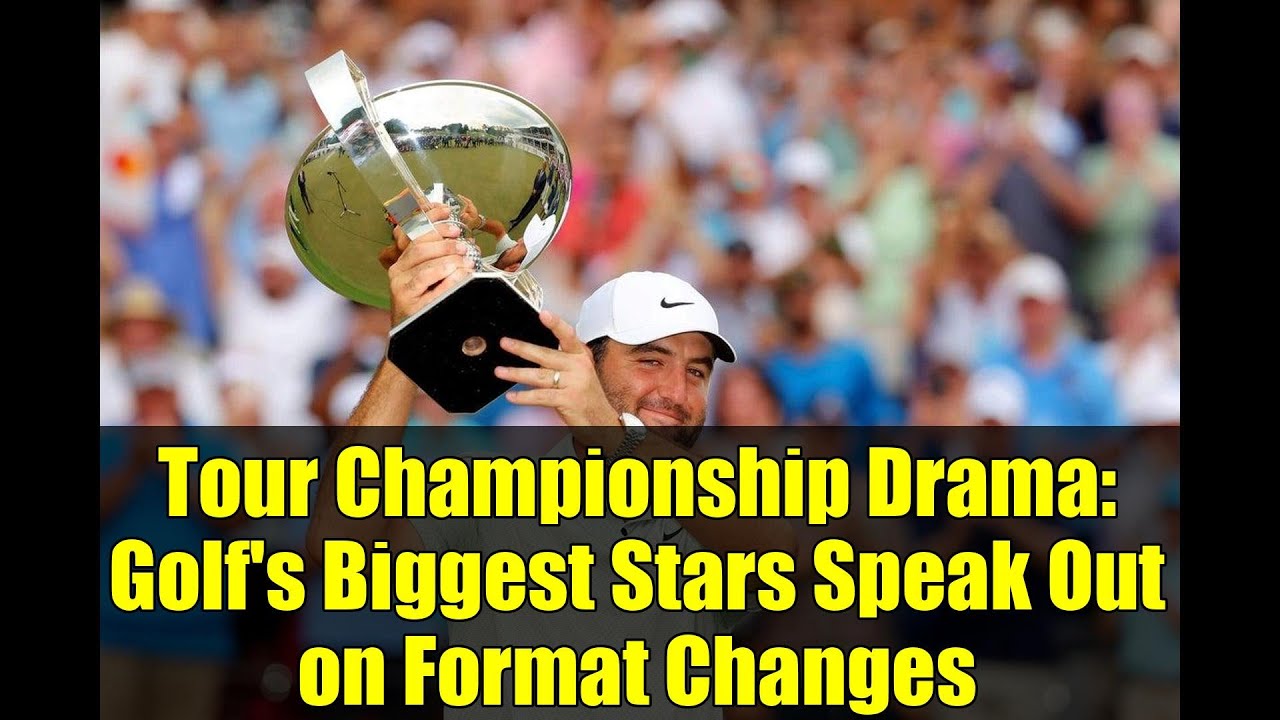



ツアー選手権のドラマ:ゴルフ界の大スターたちがフォーマット変更について語る
Here’s the shocking truth. The PGA Tour has been playing a decadesl long game of format roulette with its biggest finale and nobody can agree on the rules. Atlanta. Picture this scenario. You’ve dominated an entire golf season, winning multiple tournaments and sitting at top every leaderboard that matters. Then comes the final week and suddenly none of that excellence counts because someone else gets hot for 4 days. Fair. That’s the million-dollar question that’s been haunting the Tour Championship for over 20 years. The fundamental dilemma driving this endless cycle of changes boils down to one critical choice. Should golf season finale celebrate sustained excellence over eight grueling months? Or should it function as a winner take all showdown where anybody can claim the crown? Think of it as the difference between European football’s league system versus America’s playoff mentality. But here’s where it gets controversial. Golf might not fit neatly into either category. The world’s top ranked player has a blunt message for anyone trying to force these comparisons. People love drawing parallels to other sports, but golf operates in its own universe. Scotty Sheffller stated firmly this Wednesday. That’s all I’m saying about that. For nearly two decades, tour officials have attempted an impossible balancing act, trying to satisfy both philosophies simultaneously. The results? Players have described various format experiments using words like ridiculous, nonsensical, and baffling. Thursday marks the debut of yet another version after player complaints triggered a dramatic mid-season overhaul. But here’s the kicker. Even this latest iteration might vanish within 12 months. This week brings unprecedented clarity though. Gone are the mathematical advantages and complex calculations. For this season at least, the Tour Championship operates as a straightforward 72hole competition featuring 30 elite golfers battling for $40 million at East Lake Golf Club. While consensus on the perfect format remains elusive, players are virtually unanimous in their relief that the starting stroke experiment has ended. One amusing subplot involves Tommy Fleetwood, who some observers joke has been executing a decadel long setup for the ultimate punchline, becoming season champion in the first year without starting stroke advantages despite never winning a PGA Tour event. The journey to this point reveals the tour’s ongoing identity crisis. When the FedEx Cup playoffs launched in 2007, the system seemed logical enough. Top point errors from the regular season qualified for a series of elimination tournaments, culminating in the Tour Championship and massive bonus payouts. Between 2007 and 2018, any top five points leader who captured the final tournament automatically claimed the FedEx Cup. However, when someone outside the top five won the championship, it created an awkward split title situation. Exactly what happened in 2018 when Tiger Woods won the tournament while Justin Rose claimed the seasonal crown. Confusing doesn’t begin to describe it. Tour officials thought they’d found the solution in 2019 with their creative starting stroke system. The concept aimed to transform the tour championship into both a competitive tournament and a proper reward for seasonal excellence. Under this format, the points leader began at 10 under par, while players ranked 26th through 30th started at even par with everyone else positioned somewhere between. The system wasn’t entirely without merit. It produced several thrilling finishes and frequently the golfer with the early advantage didn’t prevail, adding drama while undermining the season champion narrative. A fundamental problem was interpretive confusion. What did victory actually mean? By attempting to check both boxes, the format satisfied neither objective completely. Starting strokes created difficulties because we never compete in tournaments structured that way. Patrick Kentley explained. So from a competitive standpoint, it felt artificial. Ricky Fowler added his perspective. The confusion was constant because you had a regular tournament happening simultaneously. Meanwhile, there was this staggered beginning with some players technically winning the tournament for world ranking purposes while something entirely different was occurring. Interestingly, not everyone opposed the system. I might be in the minority, Rory Mroy admitted, but I didn’t despise the starting strokes. I believed the player who performed best throughout the season deserved an advantage entering this event. The current shift, driven primarily by player feedback, represents a messaging pivot. Position the Tour Championship as golf’s most exclusive qualifying achievement. From there, focus on creating a marquee competition. The most compelling advocate for this change happens to be the person most disadvantaged by it. Sheffller leads the standings for the fourth consecutive year, meaning he benefits least from the level playing field. Yet, he’s the strongest proponent of making tour championship victory meaningful. Throughout multiple recent interviews, Sheffller has consistently argued that golf’s nature doesn’t lend itself to single event championships. Seasonal performance reveals true excellence and greatness comes from conquering the toughest challenges. Creating a genuine seasonlong competition where the best player consistently wins probably won’t produce dramatic conclusions most years, Sheffler reasoned. Typically, the player of the year choice is pretty obvious. Four tournaments already command special reverence. The majors and their champions often overshadow all other achievements. The players championship carries similar though lesser weight. Sheffler contends that golf has never really emphasized longevity and consistency above peak performance. Success in our sport requires exceptional play at crucial moments. He continued, “Major championship victories demand greatness during major championship weeks. If I want this year’s FedEx Cup, I need to deliver an outstanding performance.” With the obsession over finding the proper season champion apparently ended, the next challenge involves optimizing this level playing field approach. The athletics Ian O’ Conor proposed an intriguing alternative this summer. Eliminate all points considerations during playoffs. The opening tournament would advance the top 50 scorers to round two. Then the following week’s top 30 performers would reach the tour championship. A genuine playoff system like other sports employ. Mroy endorsed this concept as potentially effective last week. However, sponsors and executives would likely resist any format where stars like Sheffler or Mroy could miss the finale due to one poor week. Mroy hasn’t dismissed matchplay possibilities either, saying Tuesday, “Match play was considered and rejected this year. It might resurface in next year’s discussions or beyond.” Many golf enthusiasts advocate for matchplayed elements since no other PGA Tour event uses this format anymore. Multiple reports suggest broadcast partners oppose the idea, citing coverage difficulties and potential for boring stretches or lopsided contests. Sheffller quickly dismissed match play when asked the following morning. We maintained a matchplay tournament for several years. He pointed out, “We held a matchplay event for four or 5 years in one of the country’s fastest growing markets, and that tournament still failed. I don’t believe match play effectively crowns a season champion, and altering your final tournament’s format seems rather foolish. This timing perfectly coincides with new PGA Tour CEO Brian Rolap’s calls for substantial transformation and a comprehensive re-evaluation of the entire competitive structure. He’s established a future competition committee led by Woods, including six PGA Tour players and three business executives like John Henry and Theo Epstein. Fans shouldn’t assume anything we’re currently doing will continue indefinitely, ROAP stated Wednesday. what changes might emerge. While everything remains under consideration from rotating venues to alternative formats, Sheffller mentioned that players want to strengthen the golf’s most difficult qualifying event message. He desires an improved point system with rewards for winning the first two playoff legs, the FedEx St. Jude Championship and BMW Championship brought closer to signature event levels. So, here’s the big question. Is Sunday’s victor truly the FedEx Cup champion or merely the winner of a significant tournament? Anyone reaching the Tour Championship has earned the right to claim the FedEx Cup, Justin Thomas declared. This explains why Sheffler thoughtfully disagreed when asked whether it would be illegitimate for a winless golfer to capture the title. Sheffller’s reasoning. Reaching Atlanta without a victory requires consistently excellent golf throughout the year. Shane Lowry accumulated nine top 20 and four top 10 finishes. Cory Connors posted 10 top 20 and five top 10 results. Tommy Fleetwood has performed so impressively this season that he ranks fifth in standings despite lacking a victory. Fleetwood has become a fascinating storyline having gone nearly a decade without winning a single PGA Tour event. A statistical anomaly considering his 40 plus top five finishes during that span. His potential first PGA Tour victory this week would crown him season champion. That would be quite amusing, Fleetwood acknowledged. But perhaps the week’s most surprising revelation involved the psychological burden that starting strokes placed on Sheffller. As his caddy Ted Scott reminded him, golf’s most difficult challenge is maintaining a lead overnight. and Sheffller essentially protected the Tour Championship advantage for eight months annually across three seasons. His failures to convert were viewed as disappointments, which frustrated him deeply. It really bothered me finishing years with people saying, “Great season. Sorry about the ending.” He recalled, “I’m thinking, you know what? I won the Masters this year plus several other tournaments. That’s actually a pretty successful season. Sheffller clearly wants tour championship victory to represent an achievement, not an inevitable result of prior month’s work. Love it or hate it, we’re getting four days of elite golf at East Lake featuring this season’s 30 best players. Whether this approach succeeds long-term remains unknown. We can’t even guarantee it’ll survive another year. For now, though, this is the tour championship. I’m not sure if it’s the ideal format. Mroy concluded. But it’s what we’re working with this week. And this is the part most people miss. Maybe the constant format changes aren’t a bug, but a feature. Maybe Golf’s unique nature means there will never be a perfect system, and the ongoing evolution is actually what keeps fans engaged and players motivated. What do you think? Should golf embrace its inability to fit traditional playoff models or keep searching for that elusive perfect format? Is Fleetwood’s potential victory without a tour win this decade poetic justice or a system failure? Share your thoughts. This debate clearly isn’t ending anytime soon, and your perspective might just influence the next format
The PGA Tour’s FedEx Cup playoffs culminating event, the Tour Championship, has undergone yet another format change. Top golfers like Scottie Scheffler, Rory McIlroy, and Patrick Cantlay weigh in on the debate between rewarding a season-long champion and creating a marquee golf tournament. Discover the pros and cons of the new format and what it means for the future of the sport.